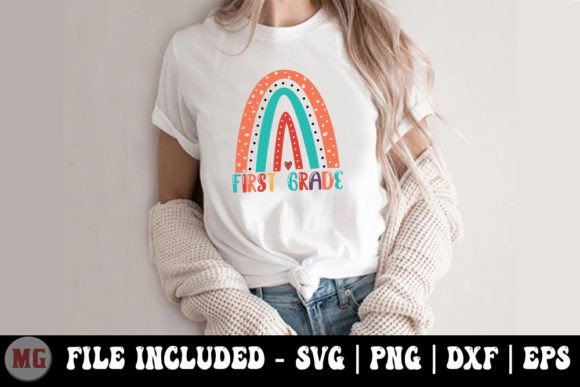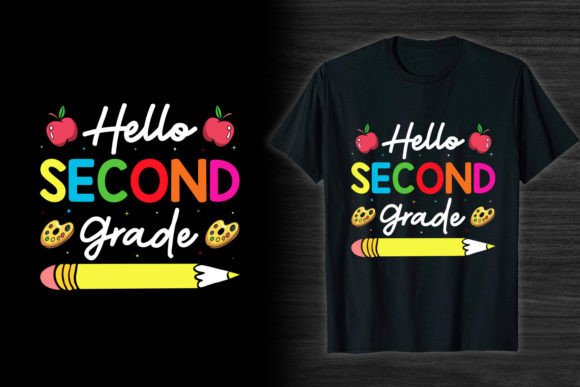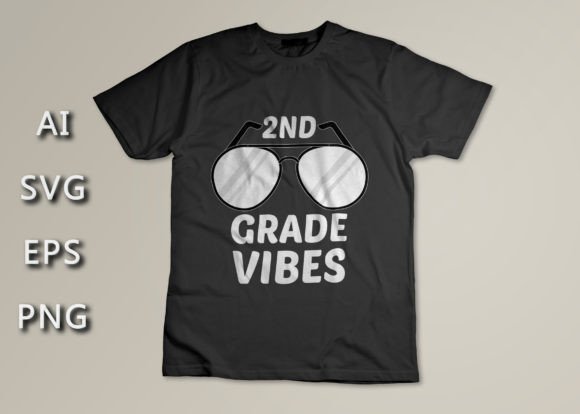
2ND Grade Vibes Back to School T-Shirt Graphics
As someone who’s launched over 200 digital product listings across Etsy, Creative Market, and Shopify—and scaled a print-on-demand brand from zero to six figures—I opened 2ND Grade Vibes Back to School T-shirt expecting another generic “school year” design. Instead, I found a surprisingly cohesive, commercially flexible graphic design asset that lands right at the sweet spot between playful and polished.
The first impression? Bright but not overwhelming. The layout balances bold typography with subtle decorative elements—think clean outlines, friendly curves, and intentional negative space. It reads as cheerful, confident, and age-appropriate for second graders without leaning into cutesy overload or oversimplified clipart tropes. That makes it ideal for buyers seeking authentic school spirit, not just seasonal filler: homeschool moms building themed planners, teachers curating classroom merch, small business owners launching back-to-school bundles, and Cricut users crafting personalized backpack tags or lunchbox stickers.
This isn’t just a t-shirt design—it’s a versatile commercial design built for reuse. I tested 2ND Grade Vibes Back to School T-shirt across seven real product formats in under two hours: SVG cut files for iron-on transfers, PNG overlays for Canva templates, sublimation-ready layers for tumblers, printable wall art (8×10 and 16×20), planner sticker sheets, greeting card mockups, and even a simple nursery print bundle. In every case, the vector foundation held up—no pixelation, no jagged edges, no lost detail when scaling down to 2 inches or up to 24 inches.
What really stood out was how well it supports visual storytelling in listings. On Etsy, I dropped it into three different mockups—a soft cotton tee, a ceramic mug, and a matte-finish tote—and each generated stronger thumbnail appeal than my previous “Back to School” listings. Why? Because the design has clear visual hierarchy: the “2ND Grade Vibes” text dominates, but the supporting elements (like tiny stars or minimal line accents) add texture without competing. That builds perceived value before the buyer even clicks.
For digital product creators, this asset shines in bundles. I paired it with coordinating chalkboard-style borders, editable name labels, and minimalist grade-level icons to build a Back to School Digital Kit—instantly expanding its utility beyond single-use t-shirt graphics. As a Canva template seller, I embedded it into editable class schedule templates and weekly planner pages. As a Cricut project creator, I separated layers to allow custom color swaps per element—essential for sellers offering personalization options.
Where does 2ND Grade Vibes Back to School T-shirt work best? Large-format printable products (wall art, banners, classroom posters), themed digital download collections, POD merchandise with high-contrast backgrounds, social media graphics for teacher influencers, and packaging design for handmade school supply kits. Its clean lines and strong silhouette also translate well to embroidery digitizing and heat-transfer applications—just confirm stitch count compatibility if outsourcing production.
Use with caution in these scenarios: ultra-small sticker formats (under 1 inch), dark-background prints without testing contrast first, dense scrapbooking layouts where fine details get lost, or templates requiring precise cut lines for intricate Silhouette projects—always inspect the SVG paths before uploading to Cricut Design Space. Also avoid pairing it with overly decorative script fonts in tight spaces; stick with clean sans serif or friendly handwritten styles for readability.
Before publishing any listing, I recommend these five practical checks: First, preview the PNG on both white and charcoal mockups to verify transparency and contrast. Second, open the SVG in Inkscape or Illustrator and run a path cleanup—some auto-traced elements may need smoothing. Third, test print a sample on your target fabric or paper stock to assess color fidelity, especially with bright yellows or sky blues. Fourth, drop it into a Canva template at 50% size to see how legibility holds up in mobile thumbnails. Fifth, confirm the included commercial license explicitly permits resale of finished physical products—don’t assume.
File organization matters just as much as design quality. When preparing customer downloads, I renamed folders clearly: “/SVG_Cricut_Ready”, “/PNG_Transparent_300dpi”, “/AI_Editable_Layers”, and “/EPS_Cross_Platform”. This reduces support requests and boosts review scores—especially important on creative marketplaces where buyers expect professional packaging.
Typography pairing is where many sellers miss opportunity. I tested 2ND Grade Vibes Back to School T-shirt with four font families: Montserrat (clean, modern sans serif), Playfair Display (elegant serif for headers), Qwitcher Grypen (bold display font for impact), and Caveat (friendly handwritten for sublines). Each worked—proof that the design’s spacing and weight accommodate variety without visual clash.
Bottom line: 2ND Grade Vibes Back to School T-shirt delivers more than a single-use graphic. It’s a foundational design asset—scalable, editable, and audience-aligned—that helps small business branding feel intentional, not improvised. Whether you’re launching your first Etsy shop or refreshing a seasonal POD collection, this one earns its place in your working library of t-shirt designs and graphics. Just remember: test early, verify licensing, and always lead with how it solves a real customer need—not just what it looks like.