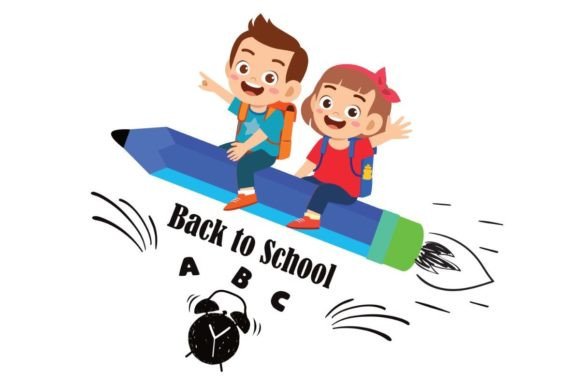
Back to School, Student, Class of 2022
A Designer’s First Look: Bright, Nostalgic—but Not Automatically Embroider-Ready
When I opened Back to School, Student, Class of 2022 for the first time—intending to stitch it onto a set of cotton tote bags for a local teacher appreciation pop-up—I paused. It’s cheerful. It’s clean. The “Class of 2022” text sits center-stage with subtle school-themed accents: maybe a tiny pencil, graduation cap, or open book (the exact elements depend on the PNG variant, but the mood is consistent). As a Graphics asset in the Crafts category, it reads instantly as celebratory and age-appropriate—not too childish, not overly academic. That makes it strong for personalized gifts, boutique merchandise, and small-batch apparel. But here’s what matters most to me as an embroidery designer: how will this translate when stitched—not just rendered on screen?
Real-World Use: From Tote Bag to Teacher Gift (and Where It Shines)
I tested Back to School, Student, Class of 2022 on a medium-weight canvas tote using a standard 4” hoop and medium-cutaway stabilizer. The result? Crisp lettering, balanced spacing, and a confident presence at 3.5” wide. It worked especially well as a tote bag design—visible from across a classroom, readable at arm’s length, and legible after three rounds of washing. Parents loved it as a personalized gift for their grad’s first day of college orientation. I also digitized a simplified version for a custom apparel run on lightweight cotton tees—and found that scaling down below 2.75” started to blur the finer details, especially if the original PNG included thin decorative lines or small icons.
Where it truly elevated the finished product: baby onesies (as a mini patch), kitchen tea towels (stitched near the hem), and embroidered patches for backpacks. In each case, the design’s clear hierarchy—bold year + supportive motif—gave instant recognition without needing explanation. That’s rare in school-themed digital embroidery files.
Where Caution Is Required: Texture, Scale, and Fabric Behavior
This isn’t a one-size-fits-all machine embroidery design. On textured fabrics like terry cloth or heavy fleece, the fine outlines can disappear into the pile—so I recommend simplifying or bolding key strokes before digitizing. On stretchy fabric (think youth-sized raglan tees), skip tight satin-stitch borders unless you’re using tear-away + cutaway combo stabilizer. And on dark fabric? Test your thread colors early. The original PNG may look vibrant on white, but light yellow or pale gray text won’t read on navy without contrast adjustment.
Also worth noting: Back to School, Student, Class of 2022 doesn’t include built-in applique layers or multi-step fill logic—so if you’re planning an applique design, treat it as a base outline only. Don’t assume the file contains pre-optimized satin-stitch caps or underlay for dense areas. That’s common with digital download PNG assets—they’re art-first, stitch-second.
What It Adds (and Doesn’t Add) to Your Craft Business
For Etsy sellers and small shop products, this design brings immediate thematic relevance—no brainstorming needed. It fits cleanly into back-to-school collections alongside monograms, name labels, and teacher-themed bundles. Customers recognize the year instantly, which builds trust in your curation. As a handmade product, it feels intentional—not generic clipart. But it won’t replace thoughtful branding. If your shop leans minimalist or vintage, this bright, contemporary style might clash unless paired intentionally (e.g., softening with muted thread palettes or pairing with neutral backgrounds).
It also doesn’t solve licensing questions. Since it’s labeled as a Digital download PNG, verify whether commercial use is permitted *for finished goods*—especially if you plan to sell embroidered sweatshirts or wholesale patches. Many PNG-based design assets allow small-batch use but restrict mass production. Always check before listing on your craft business site or marketplace.
Practical Embroidery Designer Notes You’ll Actually Use
- Test first—on scrap fabric matching your final project’s weight and stretch.
- Check stitch density before hooping. Overly dense fills can pucker lightweight cotton; sparse running-stitch versions often hold up better on baby embroidery.
- Confirm hoop size compatibility. Some PNG variants include wide banners that exceed 5” width—fine for sublimation, risky for standard hoops.
- Inspect small details at 200% zoom: Are letters kerned tightly? Do tiny icons have enough pixel buffer to survive stitching?
- Mock it in black and white—this reveals contrast issues faster than color previews.
- Use proper stabilizer—especially for curved surfaces like caps or apron pockets where distortion is likely.
- Compare light/dark fabric backgrounds in your mockup software before digitizing.
- Verify licensing for both personal and commercial embroidery projects—don’t assume “digital download” means “unlimited resale.”
Final Thought: A Solid Foundation—If You Treat It Like One
Back to School, Student, Class of 2022 isn’t magic—it’s a well-composed, timely digital embroidery file that earns its place in your toolkit when used intentionally. It works best when you lean into its clarity, not its complexity. Think: clean tote bags, confident sweatshirt embroidery, heartfelt holiday embroidery for grads starting new chapters. Skip it for ultra-detailed heirloom pieces or micro-embroidery on silk—those demand custom-drawn, stitch-optimized originals.
As a designer who ships real orders every week, I keep Back to School, Student, Class of 2022 in my “go-to school season” folder—not because it’s perfect out of the box, but because it’s honest, recognizable, and easy to adapt. Just remember: every great embroidery project starts with smart prep, not just pretty pixels.