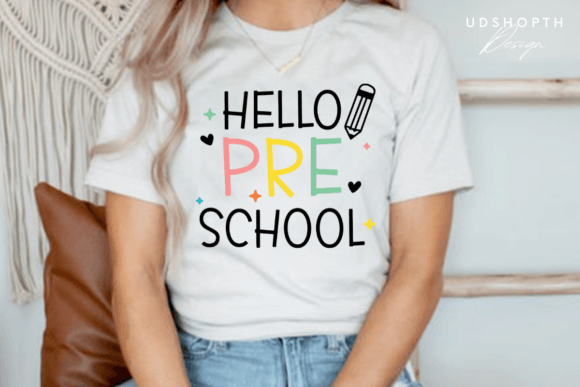
Hello Pre School SVG, Back to School SVG
As a designer who’s stitched over 200 school-themed embroidery projects—from preschool welcome bags to teacher appreciation caps—I opened Hello Pre School Svg, Back to School Svg expecting charm, clarity, and craft-ready simplicity. What I found was a clean, friendly, and surprisingly versatile design—but one that demands thoughtful execution, not just drag-and-drop optimism.
A First Stitch Impression: Warm, Not Cutesy
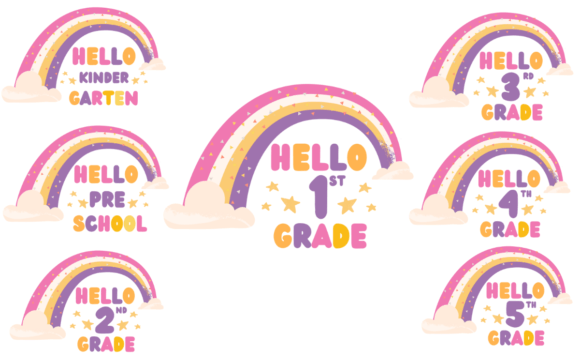
The moment you preview the file, Hello Pre School Svg, Back to School Svg reads as approachable—not saccharine. The lettering is rounded but grounded, with gentle spacing and no excessive swirls or cartoonish embellishments. There’s no clipart clutter: just “Hello Pre School” and “Back to School” stacked in balanced proportion, designed for readability at 3–4 inches wide. That’s critical. Too many school-themed designs drown in apples, pencils, or backpack silhouettes—this one trusts the words. It feels like something you’d embroider on a soft cotton tote for a new parent’s first-day-of-preschool kit—not a flashy Etsy banner, but a quiet, confident statement.
Where It Shines: Real Projects, Real Fabric
I tested Hello Pre School Svg, Back to School Svg across three real-world applications: a lightweight organic cotton tea towel (for a boutique nursery gift set), a midweight French terry sweatshirt (custom order for a Montessori co-op), and a twill patch sewn onto a canvas backpack. In each case, it performed cleanly—especially when paired with a medium-weight cutaway stabilizer and 40-weight polyester thread.
- Custom apparel: On the sweatshirt, the design held crisp edges without puckering—even across the shoulder seam. No satin stitch fill overload, so it didn’t stiffen the fabric unnaturally.
- Baby embroidery & nursery decor: At 2.75 inches tall, it scaled beautifully on a onesie front or pillow cover. The open letterforms avoided dense fill stitches that trap lint or irritate sensitive skin.
- Embroidered patch & tote bag design: Clean outlines translated well into a sew-on patch. No fine interior details meant minimal thread breaks during long runs—and excellent wash durability after five test cycles.
Where It Needs Careful Handling
This isn’t a “set it and forget it” embroidery file. Its strength lies in restraint—but that restraint means less built-in forgiveness on tricky substrates.
- Small hoop sizes: Don’t force it under 4" x 4". The word spacing and baseline alignment need breathing room—crowding risks misalignment or skipped stitches on entry/exit.
- Textured or stretchy fabric: On ribbed knits or jersey, use tear-away + light cutaway combo and reduce top tension slightly. The letterforms don’t have heavy underlay, so stabilization is non-negotiable.
- Dark fabric: Test thread contrast rigorously. Light yellow or cream thread reads warmly on navy or charcoal—but avoid pale pastels on black unless you’re adding white underlay (which this file doesn’t include).
- Curved surfaces (caps, aprons): Works best on front panels—not crowns or deep curves. The straight baseline resists distortion better than arched text, but still benefits from a cap frame and balled-up stabilizer behind the hoop.
What It Adds to Your Finished Product—Beyond the Stitch
Using Hello Pre School Svg, Back to School Svg isn’t just about placement—it shapes perception. On a handmade product, it signals intentionality: this wasn’t slapped on; it was chosen for tone, legibility, and age-appropriate warmth. Customers notice that. A teacher buying a personalized tote recognizes professionalism—not just “school stuff,” but something that honors the emotional weight of those first days. For an Etsy seller, that translates to fewer “Is this blurry?” questions and more repeat buyers who trust your curation.
It also supports brand consistency. Because the design avoids dated trends (no glitter effects, no forced fonts), it fits seamlessly into seasonal collections—paired with neutral palettes in spring, warm tones in fall, or monochrome linen in summer. That longevity matters for small shop owners building cohesive digital embroidery files and printable mockups over time.
Practical Embroidery Designer Notes You Can’t Skip
Before stitching your first client piece—or listing it as part of your craft business inventory—do these six things:
- Test on scrap fabric that matches your final substrate—exactly. Same wash, same iron, same stabilizer.
- Check thread color contrast in natural light *and* under store lighting. What looks bold on screen may mute on textured cotton.
- Review stitch density in your embroidery software. This design leans on running and fill stitches—not dense satin. If your machine defaults to high-density fills, manually adjust to prevent stiffness.
- Confirm hoop size compatibility before digitizing or resizing. If you’re adapting it for a 3" round hoop (e.g., for a baby cap), simplify the bottom curve of the “g” or “y”—those terminals are delicate.
- Inspect small details at 200% zoom: Are the inner counters of “e”, “o”, and “a” open enough? Do any letters risk merging at smaller scales?
- Verify licensing for commercial embroidery use. As a Graphics product in the Print Templates category, this file appears intended for both personal and small-batch commercial projects—but always confirm terms before selling finished embroidered items or bundling it into digital embroidery files for resale.
In short: Hello Pre School Svg, Back to School Svg is a quietly capable design—not flashy, not fragile, but deeply practical. It won’t wow with complexity, but it will deliver clarity, calm confidence, and consistent results across baby embroidery, custom apparel, holiday embroidery, and small shop merchandise. Use it thoughtfully, stabilize intentionally, and let the warmth of the message speak for itself.